Parasites’ family planning strategy helps malaria spread
28 May 2008
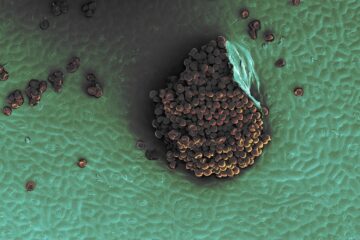
Malaria parasites ensure the successful spread of the disease by being able to produce more sons than daughters when conditions are difficult, a study part funded by BBSRC shows.
The finding by scientists at the University of Edinburgh could provide vital clues in the fight to stop the disease spreading. Determining when the parasites are likely to favour producing one sex over the other could assist the development of anti-malarial drugs and vaccines.
The discovery shows for the first time that malaria parasites are much more sophisticated than previously thought. They can respond to changes in their social situation and environment, something that is traditionally associated with more complex animals such as insects, birds and mammals.
Usually, malaria parasites will tend to produce more daughters than sons, because all the females are expected to find a mate. However, in harsher conditions, for example when under attack from a person’s immune system, or when competition to breed is high among the parasites, it is beneficial to have more sons, to increase the overall chance of their genes being passed on.
Dr Sarah Reece, of the University of Edinburgh’s School of Biological Sciences, who led the study, said: "We have long suspected that malaria parasites adjust their production of males and females to ensure their spread, and we have now shown that this is the case. We hope that by understanding the family planning strategy of these parasites, ways can be found to stop the spread of malaria."
ENDS
Images
Click on the thumbnail to view and download full-size image.
Note that this image is protected by copyright law and may be used with acknowledgement.
Notes to editors
The study, published in the journal Nature, was funded by the Natural Environment Research Council, Biotechnology and Biological Sciences Research Council and the Wellcome Trust.
About BBSRC
The Biotechnology and Biological Sciences Research Council (BBSRC) is the UK funding agency for research in the life sciences. Sponsored by Government, BBSRC annually invests around £420M in a wide range of research that makes a significant contribution to the quality of life for UK citizens and supports a number of important industrial stakeholders including the agriculture, food, chemical, healthcare and pharmaceutical sectors. http://www.bbsrc.ac.uk
External contact
Sarah Reece, School of Biological Sciences, The University of Edinburgh
sarah.reece@ed.ac.uk
tel: 07766 548334
Catriona Kelly, Press and PR Office, The University of Edinburgh
catriona.kelly@ed.ac.uk
tel: 0131 651 4401
Contact
Matt Goode, Head of External Relations
matt.goode@bbsrc.ac.uk
tel: 01793 413299
fax: 01793 413382
Tracey Jewitt, Media Officer
tracey.jewitt@bbsrc.ac.uk
tel: 01793 414694
fax: 01793 413382