Share this page:
Other services (opens in new window)
Sets a cookie

Feature: Gene clue to worm’s amazing regeneration ability

Summer 2010

<< Previous article    BBSRC Business summer 2010 contents    Next article >>

The discovery of a genetic mechanism that controls the planarian worm's ability to re-grow body parts after they have been amputated could help drive developments in regenerative medicine.

Planarium worms
Planarium worms.
© Aziz Aboobaker, The University of Nottingham

The ability to regenerate tissues, and even whole limbs, is viewed by some as the 'Holy Grail' of stem cell research. Whilst animals such as salamanders, newts and zebrafish are capable of regenerating entirely new body parts; humans, by comparison, have only rudimentary regenerative abilities - replenishing blood cells, forming scar tissue to heal wounds, and restoring the lining of the gut.

Nowhere, however, is the process of regeneration more dramatic than in the planarian flatworms. Cut one of these animals in half and, a week later, two fully functional worms will have developed from the pieces. Cut a piece that is 1/279th the size of the animal, and it too will re-grow into a complete worm: head, brain, the lot.

Planarian worms, scientists know, possess adult stem cells, which are constantly dividing and can become any and all of the missing cell types. Now researchers at the University of Nottingham, funded by BBSRC and the Medical Research Council, have added to the growing list of genes that allow re-growth to happen exactly as it should, so that new body parts end up in the right place and have the correct size, shape and orientation.

The research led by Dr Aziz Aboobaker, a Research Councils UK Fellow in the School of Biology, has shown for the first time that a gene called Smed-prep is essential for correctly regenerating a head and brain in planarian worms. The gene specifies the area in which the progeny of stem cells differentiate and coordinate to form the brain and other head structures.

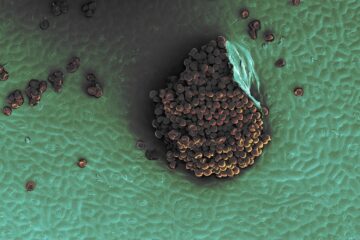
Top: Smed-Prep knockdown worms have no brain, just nerve cords in the anterior. Bottom: Normal planarium worms grow back a full brain
Top image: Smed-Prep knockdown worms have no brain, just nerve cords in the anterior (to the left)
Bottom image: Normal planarium worms grow back a full brain (to the left)
© Aziz Aboobaker, The University of Nottingham

Dr Aboobaker said, "These amazing worms offer us the opportunity to observe tissue regeneration in a very simple animal that can regenerate itself to a remarkable extent, and does so as a matter of course."

Having a really thorough understanding of the underpinning biology that drives processes such as regeneration by adult stem cells could open the door to new technologies, in areas such as regenerative medicine, being developed to a stage where they can be of social and economic benefit. Dr Aboobaker thinks that a broader study of animals with a variety of life histories appropriate for studying the basis of poorly understood biological phenomena, like regeneration in planarians, will have benefits that we can't necessarily predict the impacts of.

"This simple worm provides a model system in which to ask very basic and detailed questions about the molecular genetic mechanisms that control naturally occurring regenerative events. The ideas that transpire and develop as a result of using this system we hope will influence and inform studies in more complex animals, like the salamander, newt and zebrafish. We would expect this to be similar in nature to the impact of the major celebrated invertebrate model systems C. elegans worm and Drosophila melanogaster fruit fly."

"If we know what is happening when tissues are regenerated under normal circumstances, we can begin to formulate how to replace damaged and diseased organs, tissues and cells in an organised and safe way following an injury caused by trauma or disease. This would be desirable for treating Alzheimer's disease, for example."

"With this knowledge we can also assess the consequences of what happens when stem cells go wrong during the normal processes of renewal - for example in the blood system where rogue stem cells can result in leukaemia."

This study was published recently in the open access journal PLoS Genetics. Felix DA, Aboobaker AA (2010) 6(4): e1000915. doi:10.1371/journal.pgen.1000915

UKNSCN conference 2010

The third annual scientific conference of the UK National Stem Cell Network will be held at the University of Nottingham from 12-14 July. Over 500 delegates are expected to attend, with keynote presentations given by leading UK and international researchers. Professor Fiona Watt of the Wellcome Trust Centre for Stem Cell Research, Cambridge will deliver the third Dame Anne McLaren Memorial Lecture, which is awarded annually to a world-class female stem cell scientist.

<< Previous article    BBSRC Business summer 2010 contents    Next article >>

External contact

Dr Aziz Aboobaker, The University of Nottingham

tel: 0115 823 0378

Contact

Tracey Duncombe

tel: 01793 414695
fax: 01793 413382