How plants chill out
22 May 2012
Plants elongate their stems when grown at high temperature to facilitate the cooling of their leaves, according to new BBSRC-funded research from the University of Bristol published today in Current Biology. Understanding why plants alter their architecture in response to heat is important, because increasing global temperatures pose a threat to future food production.

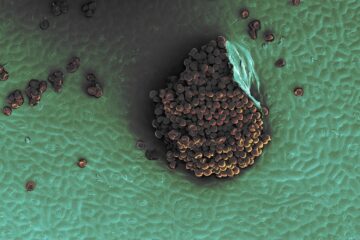
Arabidopsis. Image: iStockphoto/Thinkstock
Although scientists have made significant advances in understanding how plants elongate at high temperature, little is known of the physiological consequences of this response. To investigate these consequences, the researchers, led by Dr Kerry Franklin and Professor Alistair Hetherington in Bristol's School of Biological Sciences, studied thale cress (Arabidopsis thaliana), a small flowering plant which is a popular model species in plant biology and genetics.
When grown at higher temperatures, plants have an elongated, spindly architecture and develop fewer leaf pores, known as stomata. However, in spite of having a reduced number of stomata, the elongated Arabidopsis thaliana plants grown by the team displayed greater water loss and leaf evaporative cooling.
The researchers suggest that the increased spacing of leaves observed in high temperature-grown plants may promote the diffusion of water vapour from stomata, thereby enhancing the cooling process.
Dr Franklin said: "Temperature and water availability are major factors affecting plant yield. Understanding the relationship between temperature, plant architecture and water use is therefore essential for maximising future crop production and ensuring food security in a changing climate."
The research was funded by the Biotechnology and Biological Sciences Research Council (BBSRC). Dr Franklin is supported by a Royal Society Research Fellowship.
ENDS
Notes to editors
The paper by Crawford AJ, McLachlan, D, Hetherington, AM & Franklin, KA. (2012) 'High Temperature Exposure Increases Plant Cooling Capacity', was published in Current Biology. For further information see external contact below.
About BBSRC
BBSRC invests in world-class bioscience research and training on behalf of the UK public. Our aim is to further scientific knowledge, to promote economic growth, wealth and job creation and to improve quality of life in the UK and beyond.
Funded by Government, and with an annual budget of around £445M, we support research and training in universities and strategically funded institutes. BBSRC research and the people we fund are helping society to meet major challenges, including food security, green energy and healthier, longer lives. Our investments underpin important UK economic sectors, such as farming, food, industrial biotechnology and pharmaceuticals.
For more information about BBSRC, our science and our impact see:
www.bbsrc.ac.uk.
For more information about BBSRC strategically funded institutes see:
www.bbsrc.ac.uk/institutes.
External contact
Hannah Johnson, Press Officer
hannah.johnson@bristol.ac.uk
tel: 01179 288896
Dr Kerry Franklin, School of Biological Sciences, University of Bristol
kerry.franklin@bristol.ac.uk
Contact
Rob Dawson, Head of News
rob.dawson@bbsrc.ac.uk
tel: 01793 413204
Chris Melvin, Media Officer
chris.melvin@bbsrc.ac.uk
tel: 01793 414694
fax: 01793 413382
Tracey Jewitt, Media Officer
tracey.jewitt@bbsrc.ac.uk
tel: 01793 413355
fax: 01793 413382