• Skip to content
  • Accessibility information
  • Skip to content
  • Accessibility
  • Help
  • Advanced search
  • Search

BBSRC - Biotechnology and Biological Sciences Research Council

Site navigation

  • Home
  • News
    and events
  • Research
    funding
  • Working
    with business
  • Science
    in society
  • Our
    organisation
  • Our
    research
  • Publications

You are in

  • Home
  • Our research
  • International programmes
  • Delivering on global responsibilities

Our research:

  • BBSRC Sustainable Bioenergy Centre (BSBEC)
  • Search awarded grants
  • Search institute publications
  • International programmes
    • European Framework Programme
    • Horizon 2020
    • European Molecular Biology Organization
    • Co-operation in Science and Technology
    • European Science Foundation
    • Science Europe
    • Human Frontier Science Program
    • European Research Area Networks (ERA-Nets)
    • ELIXIR - European life science infrastructure for biological information
    • UK Collaborative on Development Sciences (UKCDS)
    • Delivering on global responsibilities
  • Our portfolio
  • Topical issues
  • Our impact
  • Strategic overview
  • Multidisciplinary research
  • Systems approach

Related links

  • Feature: Halting the armyworm march using biological control
  • Press release: Major scientific push to tackle agricultural productivity and food security in developing world
  • UK Collaborative on Development Sciences (UKCDS)
  • Publication: Developing countries
  • Sustainable agriculture research for international development
  • Combating infectious diseases of livestock for international development (CIDLID)

External links

BBSRC is not responsible for content of external websites

  • Department for International Development
  • Global Food Security 
Share this page:
Other services (opens in new window)

Delivering on global responsibilities

UK bioscience helps to tackle major global challenges such as the impact of climate change, food security and the threat of disease. We have run three joint calls (described below) with other funding agencies to provide funding for joint projects between scientists in the UK and in developing countries.

Sustainable agriculture research for international development (SARID) - 2008

In 2008 we launched a £7.5M programme with the Department for International Development (DFID). Sustainable agriculture for international development is focused on translating UK research on crop science into practical solutions and benefits in the developing world and aims to tackle some of the most damaging and widespread pests, diseases and harsh environmental conditions which can devastate crop yields in these areas.

Combating infectious diseases of livestock for international development (CIDLID) - 2009

In 2009 DFID, BBSRC and the Scottish Government made to £9.5M is available to support high-quality basic and strategic biological and biotechnological research into infectious diseases of the principal livestock species in Sub-Saharan Africa and South Asia. The aim was to enhance the livelihoods of the poor in these regions by improving livestock health, welfare and productivity by enabling more effective sustainable management of livestock diseases.

Sustainable Crop Production Research for International Development (SCPRID) - 2011

In a unique and important move to harness science to improve food security for millions of people in the developing world, BBSRC, DFID, the Bill & Melinda Gates Foundation and the Indian Government announced a £20M joint research initiative to fund teams from the UK, India and developing countries to work on research projects to improve the sustainability of vital food crops. The research will particularly investigate ways to improve the disease-resistance and stress-tolerance of staple crops in sub-Saharan Africa and South Asia.

Case studies

Nematode-resistant bananas

Technology developed with BBSRC and DFID funding at the University of Leeds and the John Innes Centre is being used to develop varieties of banana (see picture, right) that can resist attack by nematode worms.

Larger ImageHalting armyworm rampage with biological pesticide

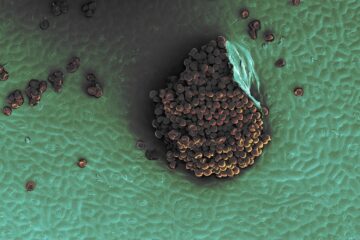
The African armyworm (see picture, left) is a major migratory insect pest, which feeds voraciously on cereal crops. Using a radical new solution, researchers from the UK, Canada and Tanzania will investigate the use of a naturally occurring virus in armyworms with a view to using it as a biological pesticide.

Contact

Amanda Read
amanda.read@bbsrc.ac.uk
tel: 01793 414665
fax: 01793 413234


Site information

  • Site map
  • Terms of use
  • Privacy and cookies
  • Freedom of Information
  • Download logo
  • Contact us
  • webmaster@bbsrc.ac.uk