

External links
BBSRC is not responsible for the content of external websites
Yeast reveal clues to human genetic diseases
Gene function results could lead to new drugs and therapies
6 April 2011
It often pays to carry a spare and the cells of many organisms are no different. Most animal, plant and fungal cells contain two copies of each chromosome and, as a result, two copies of each gene. Like a monarch that has two sons, an heir and a spare, it's a system that provides cover in case a gene or chromosome is damaged.
A full set of chromosomes (or karyotype) is essential for a healthy life. Image: National Institutes of Health (NIH)
Many cellular functions can be adequately covered by just the one chromosome, but research continues to reveal that the copy number of genes in a cell can be critically important to normal functioning – an increased or reduced copy number of genes, or chromosomes, can lead to genetic diseases or even cancer.
The classic example is Down's syndrome, which is caused by an extra chromosome (or part of) 21. Chromosome reductions, too, can also lead to serious health defects. When the two-chromosome (diploid) condition is reduced to one (haploid) then the activity of the single gene (or level of the resulting protein) may be insufficient to maintain normal functioning.
This is called haploinsufficiency, and it has been found in more than 20 tumour-suppressor genes, including the BRCA1 and 2, and p53 genes associated with cancer. "Nearly 400 genes associated with human heritable diseases are known to show haploinsufficiency - including some associated neurological disorders and mental retardation," says Professor Steve Oliver at the University of Cambridge.
Survival of the fitter
Identifying such regions in people is a complex, time consuming and expensive process. So Oliver and colleagues Michaela de Clare and Pınar Pir, also of the University of Cambridge, looked for haploinsufficient genes in more than 5,800 strains of bakers' yeast, Saccharomyces cerevisae.
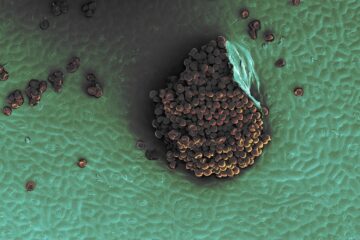
Yeast cells under a light microscope. The ruler marks are 11 µm (thousandths of a centimetre) apart. Image: Bob Blaycock
To find them, the made growing yeast strains compete against each other in cell continuous cell culture. "This is like setting up a race with 5,800 runners," says Oliver. "Those that lose the race and become rarer in the population are the haploinsufficient strains."
The team then used their list and position of yeast haploinsufficiency genes in yeast to predict where the corresponding genes would appear in humans. Even though a kingdom apart, yeast (fungi) and humans (animals) and share around 33% of their genes, many of which are highly conserved and have changed relatively little over evolutionary time.
Hence, of the 5-600 human haploinsufficient genes predicted by the yeast results 104 are associated with human genetic diseases, demonstrating that with a 'hit rate' of more than 20%, the technique can extrapolate genetic disease data from yeast to humans (ref 1).
However, Oliver says that of the 104 disease-associated human genes that his team predicts should show a haploinsufficient phenotype, only 5 have so far been shown to do so. "Our 99 candidates for a role for haploinsufficiency in disease include human genes associated with the heritable susceptibility to skin cancer (Xeroderma pigmentosum), colorectal cancer, and the neurodegenerative diseases Parkinson's and Alzheimer's," says Oliver.
Shuffle up
Sex chromosomes can be important determiners of offspring health. Image: NIH
The results offered an additional prediction. The team's yeast data predicts that haploinsufficiency genes be excluded from the X chromosome. This makes sense, because there is only one copy of the X and Y chromosomes (also known as the sex chromosomes) in each cell in normal males. Thus, evolution has shuffled these haploinsufficiency genes away from chromosomes that lack backup to maximise the chances of a fully functioning cell.
Results from the sex-determining chromosomes of the well studied fruitfly Drosophila melanogaster and nematode worm Caenorhabtidis elegans also back up the notion that haploinsufficiency genes can be predicted from yeast up through the tree of life.
In fact, this 'phenologue' approach of aligning analogues of genes from lower organisms with physical traits (phenotypes) and then scaling up in more complex animals is already established. Conditions from cancer to neurodegenerative and prion diseases, as well as biological processes such as apoptosis (cell death) and DNA repair are currently studied in yeast cells. Furthermore, screening libraries of yeast varieties and mutants is widely used to find potential gene targets for drug development.
Oliver says his team are now undertaking experiments with cultured human cells to test their predictions. "If the majority of our predictions are borne out, this will give important insights into the mechanisms of several human diseases and may suggest routes to therapy by correcting what is only a partial (and quantitative) loss of gene function."
References
Contact
Arran Frood
arran.frood@bbsrc.ac.uk
tel: 01793 413329
fax: 01793 413382