• Skip to content
  • Accessibility information
  • Skip to content
  • Accessibility
  • Help
  • Advanced search
  • Search

BBSRC - Biotechnology and Biological Sciences Research Council

Site navigation

  • Home
  • News
    and events
  • Research
    funding
  • Working
    with business
  • Science
    in society
  • Our
    organisation
  • Our
    research
  • Publications

You are in

  • Home
  • Our research
  • Topical issues
  • Food security
  • Secure harvests

Topical issues:

  • Animal welfare
  • Environmental change
  • Food security
    • Introduction
    • Overview
    • Secure harvests
    • Food security workshops
    • Fighting Campylobacter food poisoning
  • Nanotechnology
  • Obesity
  • Research on ageing
  • Stem cell research

Related links

  • Consultation: Future directions in research relating to food security
  • Bioscience behind secure harvests

External links

BBSRC is not responsible for content of external websites

  • Global Food Security
Share this page:
Other services (opens in new window)

Secure harvests

Global Food Security Logo

The world’s population is growing inexorably and harvests worldwide are threatened by climate change.

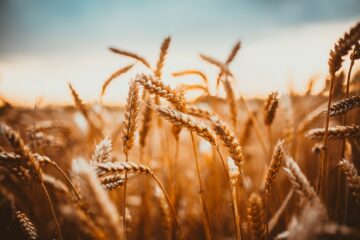
Global food security ultimately depends on growing enough crops. Sufficiency and sustainability of harvests are the primary needs. We need to identify and select crop traits and production systems that can increase yields in particular soils and climatic conditions, and reduce losses to pests and diseases.

To achieve this, research supported by BBSRC, and other funders including Defra, DFID, EU and BBRO, is focusing on a number of areas.

Harnessing natural diversity

Plant science research reveals information on characteristics such as shape, flowering, energy conversion, resistance to pests and disease, and adaptability to poor soil. Underlying mechanisms can then be harnessed to improve crops.

Increasing crop yields

Crop yield is determined by a complex mix of genetic and environmental factors. Ultimately, it depends on how much energy the plant captures from sunlight and how efficiently it is converted into a harvestable product (e.g. grain or leaf).

Reducing the impact of pests and diseases

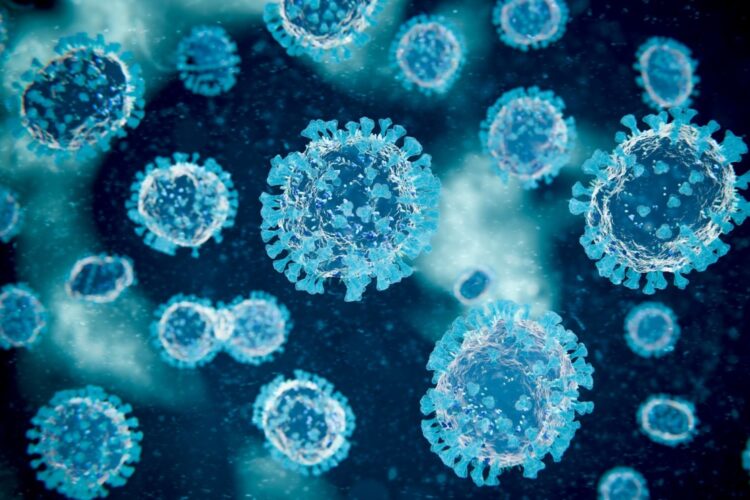
Around 25% of the world’s crops are lost to pests or diseases. Climate change can exacerbate this, for example, milder winters enable aphids to survive and damage crops earlier in the growing season.

Research is providing a number of options for improved control of pests and diseases including:

  • Better preventative, diagnostic and pre-emptive strategies
  • Development of naturally resistant crops
  • Strategies to prolong the effectiveness and sustainable use of existing pestiides
  • Development of novel control agents (chemical and biological)

Case study

Disease-resistant crops

Work led by Rothamsted Research (RRes) scientists in India has helped develop disease-resistant oilseed brassicas. This involved 5000 farmers in training programmes at 73 sites. The work has led to increased self-sufficiency in vegetable oils and enabled short-duration oilseed production in rotation with rice where land was previously left fallow.

Around 500M people worldwide depend on the grain crop pearl millet. Downy mildew disease can reduce crop yields by up to 80%. RRes’ collaborative research with Indian scientists has included identifying breeding lines of Indian mustard and oilseed rape-Ghobi sarson resistant to multiple strains of downy mildew and white rust pathogens, and lines of oilseed rape-Ghobi sarson tolerant to Alternaria blight and stern rot under Indian field conditions.

Contact

Riaz Bhunnoo
riaz.bhunnoo@bbsrc.ac.uk
tel: 01793 442194


Site information

  • Site map
  • Terms of use
  • Privacy and cookies
  • Freedom of Information
  • Download logo
  • Contact us
  • webmaster@bbsrc.ac.uk